Getting started · Strength training
Beginner strength training program
Two full-body sessions. Familiar movements. A clear way to add reps before adding weight. Start with a plan you can repeat, not a routine that leaves you exhausted.
Written by Pulse · General training guidance for healthy adults
Start with two non-consecutive days
Try Workout A on Monday and Workout B on Thursday, leaving at least one rest day between sessions. These are starting examples, not an automatically assigned Pulse program. Adapt the movements to your equipment and experience.
The 2026 ACSM guidance emphasises consistency and training all major muscle groups at least twice weekly, rather than a complicated plan. AUSactive recommends two to three non-consecutive full-body sessions for beginners. [1] [2]
Your first two workouts
These are working sets, not warm-ups. Use light loads while learning each movement. Rest roughly two minutes between working sets, longer if needed to repeat good technique.
Workout A
- Dumbbell bench press or incline push-up
- 2 × 8–12
- Dumbbell bench press techniqueIncline push-up technique
Workout B
- Supported split squat
- 2 × 8–12 each side
- Side plank
- 2 × 15–30 seconds each side
Machines and supported alternatives are valid starting points. Use the exercise library for cues and available demos; ask a qualified trainer to check unfamiliar lifts.
Warm up for the movements ahead
Begin with a few minutes of easy movement, then comfortable mobility or bodyweight drills for the muscles you will use. Before your first loaded squat, hinge or press, rehearse it with light ramp-up sets. Warm-ups should prepare you, not tire you out.
For example, a leg-focused session might include a controlled lunge with rotation, bodyweight squats and a short deep squat hold. If pressing comes later, add an easy incline push-up or shoulder drill too. Pulse selects warm-up movements across the session, not only for the first exercise.
Choose a weight you can control
Finish each lifting set feeling you could still complete about two or three clean repetitions: 2–3 reps in reserve (RIR). You do not need to train to failure to get started. Reduce the load if technique breaks down before the bottom of the rep range.
Add reps first, then weight
For 2 × 8–12, keep the same weight while gradually adding repetitions. Once both sets reach 12 with controlled technique and the intended reps in reserve, try the smallest practical weight increase. Reps may return nearer eight; build them up again. If the next weight is too heavy, stay at the current load rather than forcing it.
This is double progression. Pulse uses it for members who choose Beginner as their training experience. Log working sets accurately so suggestions reflect what you actually completed.
Build and track your plan in Pulse
For this starting plan, use a two-day full-body program rather than a split that trains a different body part each day. Keep Workout A and Workout B on non-consecutive days, choose the alternatives that fit your equipment and retain the working sets and rep ranges above while learning the movements.
- Choose Beginner in your fitness profile and set your goal, training days and equipment.
- In Training, open Create Your Own → Build Custom Program. Select Build Strength and Beginner in the builder, then assemble your two full-body sessions. Review each movement before saving; opening the builder does not automatically copy this example.
- Complete the readiness check-in, then log warm-ups, working sets and lifting RIR.
- Review exercise history and weekly muscle work in Trackables. Judge progress across repeated sessions, not one difficult day.
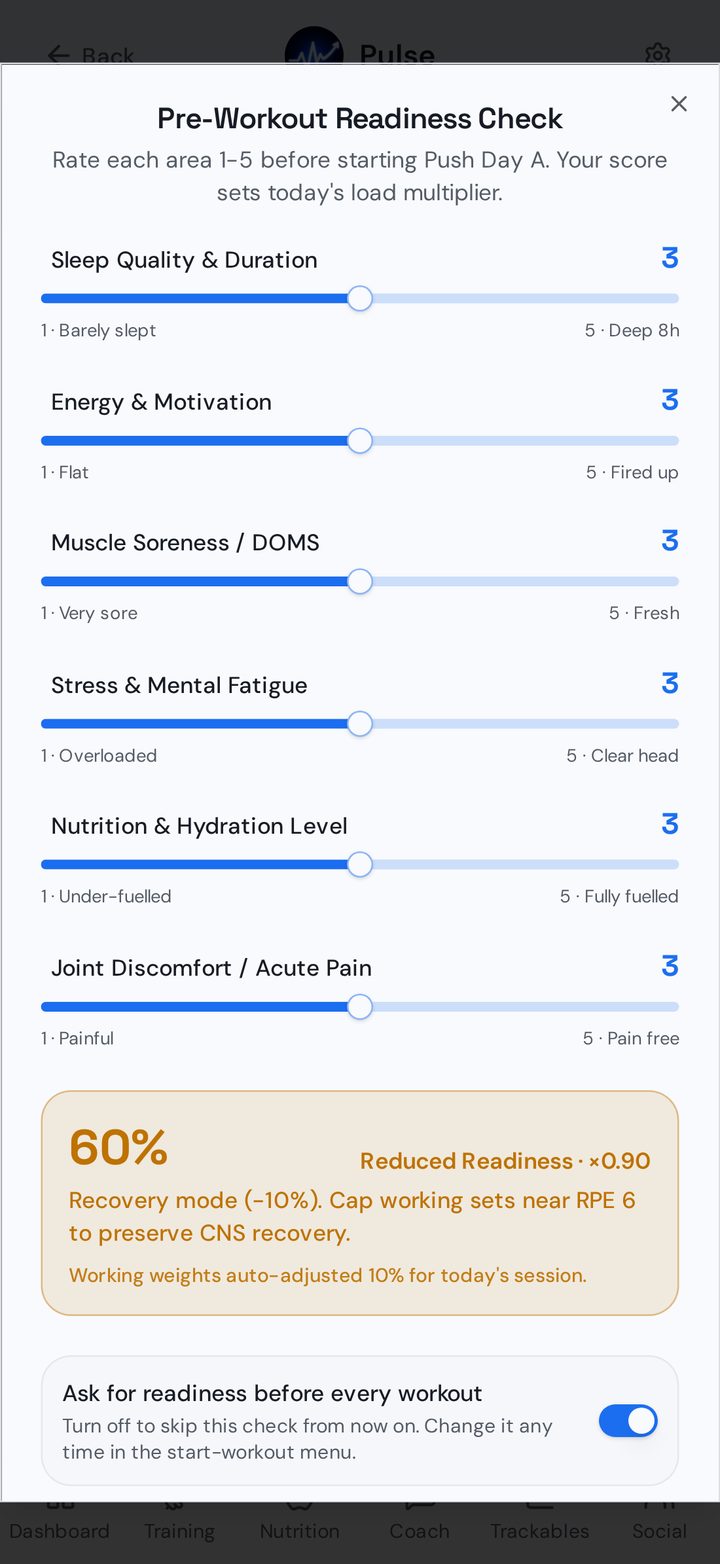
If recovery is poor, follow the adjusted prescription rather than chasing your best session. If several sessions feel unusually difficult, review your logs with Coach before adding work.
What to look for after a few weeks
Look for consistent attendance, more controlled repetitions and gradual rep or load increases. There is no guaranteed timetable. Keep a manageable schedule, eat regular meals and allow time to recover. A missed workout is not a reason to double the next one.
This guide is not medical advice or rehabilitation programming. Stop an exercise that causes pain. If you have an injury, medical condition or concerns about starting exercise, seek guidance from an appropriate health professional.
Make the plan your own
New to Pulse
Create a free account, choose Beginner during setup, then open Training → Create Your Own → Build Custom Program to save Workout A and Workout B. Logging your sets, the program builder and your training history are free.
Want Pulse to build and adjust the plan for you? The AI coach can generate programs, adjust them after check-ins and analyse your form from videos.
Already a member
Build a two-day full-body plan with the sessions above, or review your existing personalised program before adding another.
Can train three days a week? See the three-day beginner workout plan.